The Earth in Minecraft: Arnis, BuildTheEarth, Terra++, Tellus and WorldCraft
Seven ways to get the real world into Minecraft, and what each one does best.
These projects solve different problems, and several of them do things Arnis does not try to do. Arnis generates a world file of one area you choose, which you keep and can play offline in Java or Bedrock Edition. BuildTheEarth is a community building the planet by hand, Terra++ and Tellus are Java mods that generate the Earth around you as you walk, and WorldCraft is a server where you can visit any address.
I make Arnis, so I have kept what I say about the other projects to what their own pages state, checked in November 2026. If something here is out of date, tell me on Discord and I will fix it.
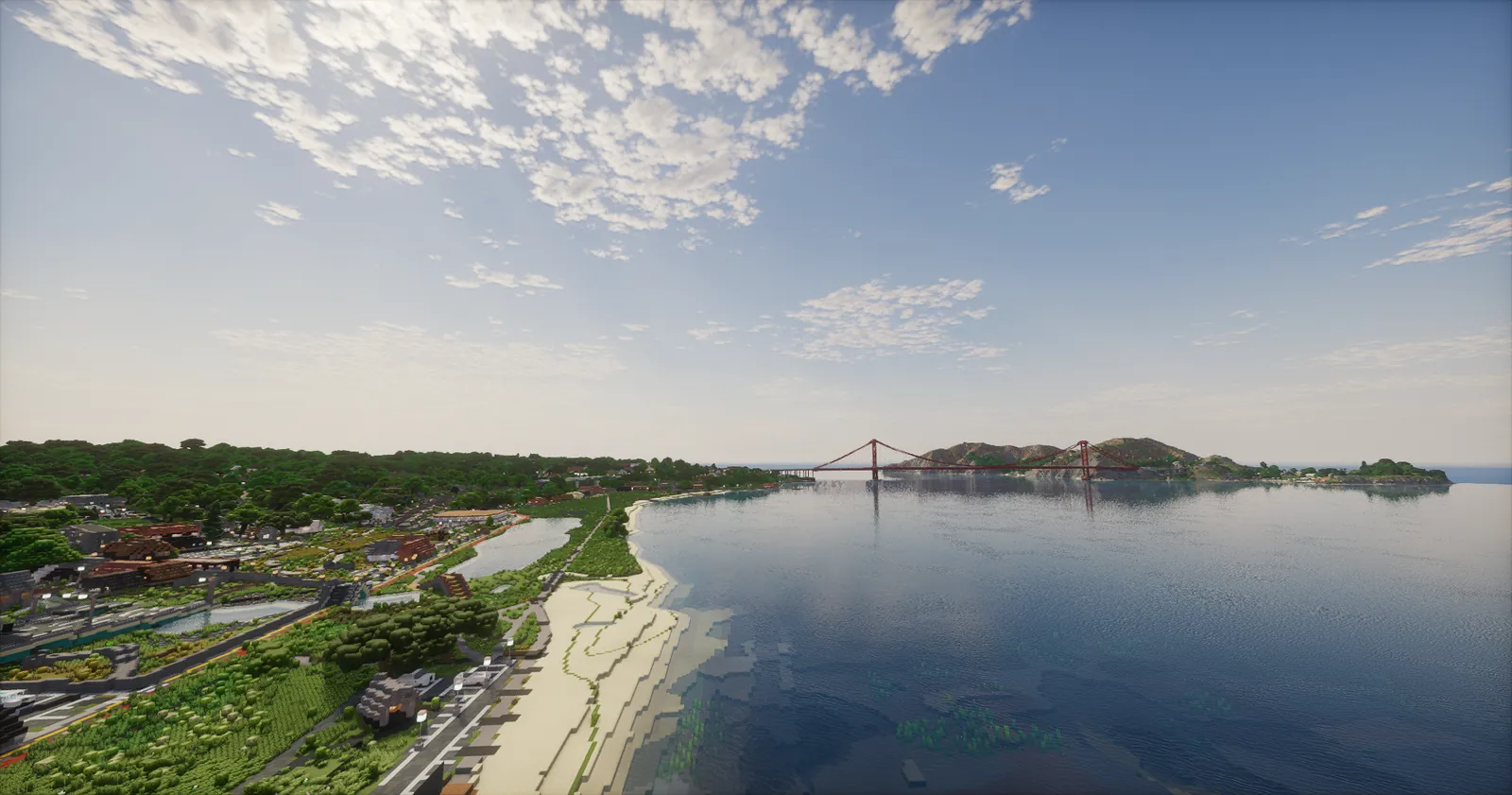
At a glance
| Project | What it is | What you get | Editions | Cost | Best at |
|---|---|---|---|---|---|
| Arnis | Desktop app for Windows, macOS and Linux | A world file of the area you select, saved on your computer | Java 1.21.4 or newer, Bedrock 1.21.0 or newer | Free, open source | Your own town or city as a world you keep |
| MapSmith | The official online version of Arnis, in the browser | The same world file, generated on a server, as a download | Java (up to 750 km²), Bedrock (up to 250 km²) | €3 to €50, by area | Phones and tablets; nothing to install |
| BuildTheEarth | Community project with regional Build Teams | Servers to visit, with places built block by block at 1:1 scale | Java | Free | Hand-built detail; building together with a team |
| Terra++ | Forge mod built on Cubic Chunks | A world type with 1:1 terrain and roads, generated while you play | Java 1.12.2 | Free, open source | The whole planet as one continuous world |
| Tellus | Mod for Fabric and NeoForge (Forge on 1.20.1) | A world that streams terrain, roads and buildings as you explore | Java 1.20.1 to 26.3 | Free | The whole planet on current versions, at any scale |
| WorldCraft | Public server | A shared Earth where /go plus an address takes you there |
Java and Bedrock | Free to join, optional paid perks | Visiting any address with other players, instantly |
| Voxel Earth | Server and plugin | Cities converted from Google's 3D scans into blocks | Java | Free to visit; the plugin needs a Google API key | The look of the real, scanned city |
| WorldPainter | Map editor | A landscape you paint and sculpt, or start from a height map | Java | Free, open source | Full control over every hill and river |
Arnis has limits of its own. It builds one selected area at a time, and large areas need memory: up to about 100 km² works on most computers, areas over 200 km² need about 6 GB of RAM and areas over 500 km² about 13 GB. A building that is missing from both OpenStreetMap and Overture Maps cannot be generated (see Missing buildings and how to fix them on OpenStreetMap).
BuildTheEarth: real places built by people
BuildTheEarth is one of the biggest community projects in Minecraft. Since March 2020, more than 17,000 builders in regional Build Teams have been recreating the planet at 1:1 scale, block by block, and the project counts over a million buildings. Because people build every one of them, landmarks often get a level of detail that no generator reaches. Visiting is free: add the server buildtheearth.net in Java Edition and you arrive in the hub. To help build, you join the Discord server of the team for your region, and most teams ask for a small trial build first.
A place is there once a team has built it, so the map keeps growing. If you want to build something big together with other people, this is the project to join.
Terra 1-to-1 and Terra++: the planet as one world
Terra 1-to-1 made it possible to walk the whole Earth at full scale in a single Minecraft world, and BuildTheEarth grew up around it. It is a Forge mod for Minecraft 1.12.2 that adds a world type in which every block is one meter, built on the Cubic Chunks mod so the world can reach real mountain heights. Terra++ is the faster fork in the BuildTheEarth organization on GitHub and the generator behind BuildTheEarth's 1.12.2 builds. Both generate terrain from elevation data and roads from OpenStreetMap while you play, and Terra 1-to-1 has an option for building outlines.
Both fetch their data as you move, so they need an internet connection while you play.
Tellus: the planet on current Java versions
Tellus brings the same idea to current Minecraft, with a lot of polish. It generates terrain, land cover, roads and buildings around you as you explore, adds real weather and time of day, has an in-game map for teleporting to real places and a scale setting from 1 to 500 meters per block. Scaled down, you can cross a whole country in an afternoon. It runs on Fabric and NeoForge from Minecraft 1.20.1 up to 26.3 (Forge on 1.20.1), and on a server it only has to be installed on the server, so players join with an unmodified game. Tellus credits Arnis for parts of its road and building logic, which is exactly what open licenses are for.
Tellus streams its data, so it needs an internet connection while you play. The closest thing in Arnis is Live One World mode, where Arnis runs a Java server on your computer and keeps generating land ahead of you.
WorldCraft: any address, one command away
WorldCraft opened in November 2026 as a public server at worldcraft.gg that describes itself as a 1:1 replica of Earth. You join from Java or Bedrock Edition, type /go followed by an address, and the area is generated for you from OpenStreetMap and other data. It is the quickest way to stand in front of a building you know: nothing to install, and other players around. Joining is free, and the server sells optional perks in its store.
The world lives on their server, so you explore and build there rather than keeping a copy of your own.
Voxel Earth: Google's 3D tiles as blocks
Voxel Earth takes a different route. It converts Google's Photorealistic 3D Tiles into blocks, so a city keeps the shapes and colors of its 3D scan, which looks striking for skylines and landmarks. You can join its server at play.voxelearth.org, or run the plugin on your own Paper or Spigot server (1.20.4 or newer) with a Google Maps Platform API key.
Arnis builds from OpenStreetMap and uses no Google data, as Google Maps to Minecraft explains, so the same city looks quite different in the two.
WorldPainter: terrain you shape yourself
WorldPainter is a free, open-source map editor for Java Edition that has been around for many years. You paint and sculpt the landscape with brushes, as in a paint program, and it can create a world from a height map image, including 16-bit ones. When you want to decide the shape of every hill yourself, it is the tool to use.
It does not read map data, so for a real place the streets and buildings are yours to add. Arnis works the other way round: it starts from real elevation data and adds rivers, land cover and trees, as Real-world terrain in Minecraft describes.
Which one should I use?
- My own town as a world file I keep. Arnis on a computer, free, or MapSmith in the browser, from €3. How to use Arnis covers the first world.
- I play on a phone or tablet. MapSmith delivers a Bedrock
.mcworldfile. Consoles are not officially supported; the Realm workaround is in How to import a Minecraft world. To visit places with other players instead, WorldCraft also takes Bedrock players. - The whole planet in one Java world, with no edges. Tellus on a current Minecraft version, Terra++ on 1.12.2.
- Other people on a server. BuildTheEarth for places built by people, WorldCraft for any address on demand. To host a real city yourself, see A real city as a server map.
- The look of a scanned city. Voxel Earth.
- Terrain sculpted by hand. WorldPainter.
Arnis is not affiliated with any of these projects. For current details, go to their own sites: BuildTheEarth, Terra 1-to-1, Terra++, Tellus, WorldCraft, Voxel Earth and WorldPainter.
Make your own area
Pick a place on the map and get it as a Minecraft world for Java or Bedrock.
Generate it online with MapSmith Download Arnis (desktop, free)